My very last blog post of the semester. I have to admit, it is quite bittersweet for me as I have enjoyed the class tremendously. I have enjoyed the seminars, blogs, videos, and novels. Thank you Fitzgerald for yet again, facilitating and teaching such a wonderful class.
My last blog topic is about the human crisis seen in the Congo. The headline of this BBC article is titled "Human crisis in Congo 'worse than Syria'". Many of us know that Syria has been faced with mass destruction and loss of life, especially loss of life of children. Injured and deceased children have been circulating our social medias and the president of this country as issued a ban on Syrian refugees. Some of you may have also heard about the backlash of the German government leaders for allowing Syrian refugees into their country.
Well, in the Democratic Republic on Congo has been faced with the fleeing of its people, starvation of its people, death of its people, and corruption in its government and politics. Militias are fighting one another over territory and more likely than not, do not concern themselves with the health and safety of their people. Here is how severe the issue is, "Despite there being four million displaced people, as well as more than seven million struggling to feed themselves, international aid has been slow to materialise, Ms Blom said" (BBC). The Democratic Republic Congo is faced with lack of stability in government and the lack of democratic elections held. Violence is increasing and people are leaving because if they stay, they likely to starve to death or face disease from lack of aid, or be caught in the crossfire of battling militias. It isn't like the Democratic Republic of Congo is poor and lacking in resources, it is that resources are being withheld and not properly distributed.
How many of us really knew that this was going on? I sure didn't. Before taking this class, I honestly thought of the Congo as one large entity with nothing but forest and jungle. Please read up on worldly issues, although I know how depressing it may be.
Have a wonderful holiday break and I hope that next semester is full of successes for each and every one of you. Some of you, see you in American Ethnic History! :)
http://www.bbc.com/news/world-africa-42250230
Wednesday, December 6, 2017

Wednesday, November 29, 2017
Musa Hilal

Musa Hilal is a Sudanese tribal chief and Janjaweed militia leader. The Arab Janjaweed militia led a military campaign in Dafur against its citizens in 2003 which was seen as an attempt at genocide--ethnic cleansing "against Dafur's black African population" (BBC). Afterwards, the UN placed sanctions on Hilal because he was suspected of violating UN laws in Dafur when leading the military campaign. In January 2008, Hilal was nominated as the chief advisor of the Ministry of Federal Affairs of Sudan which gave him more military power. In January 2014, Hilal created a new political group known as the Sudanese Awakening Revolutionary Council.
Musa Hilal has a long history of running into problems with the law. In the 1990s, he was imprisoned on charges of murdering 17 people. He was accused and imprisoned for robbing a bank and in the early 2000s he was imprisoned by the governor of Nothern Dafur. According to a source used by Wikipedia, "On February 27, 2008, Mr. Reeves reported the destruction of 30 villages, the assassination of 200 people, the rape of over 200 girls and women, and the kidnapping of 150 women and 200 children.[7] These actions, Reeves argued, were executed by Janjaweed militias under direct order of militia leader, Musa Hilal." (Wikipedia)
Currently, Hilal is imprisoned after being arrested for fighting Sudanese law enforcement in North Dafur. He would not give up his weapons after his forces ambushed the Sudanese forces.His son who is also following in his footsteps, Habeeb, has also been arrested.
https://en.wikipedia.org/wiki/Musa_Hilal
http://www.bbc.com/news/world-africa-42141938
Thursday, November 23, 2017
Rwanda and Libyan Refugees
Recently, video footage has shown that Libyans are being sold off as slaves for around $400. These Libyans often are seeking refuge in Europe, but do not always make it there. Instead, smugglers capture them and sell them off or they hold them for ransom which the families most of the time can not pay. As slaves, they are sold for little money and receive little to no money for their work. However, Libyans are not the only ones being sold off as slaves. Most migrants come from Mali, Senegal, Ivory Coast, Nigeria, Sudan, Egypt, Eritrea, and Somalia. Those countries that do not border that waters dividing Africa and Europe, travel through Niger, Chad, and Libya.
In response with these horrific events, Rwanda pledged to aid around 30,000 refugees. Foreign Minster of Rwanda, Louise Mushikiwabo said that although Rwanda is a small country, they would accomodate those that are being smuggled and sold off into slavery. She made it clear that while no one gave aid to stop the Rwanda genocide, they can not idly stand by and do nothing. Lastly, BBC noted that:
The minister also said negotiations were also continuing with Israel about accommodating African migrants seeking asylum there.
In response with these horrific events, Rwanda pledged to aid around 30,000 refugees. Foreign Minster of Rwanda, Louise Mushikiwabo said that although Rwanda is a small country, they would accomodate those that are being smuggled and sold off into slavery. She made it clear that while no one gave aid to stop the Rwanda genocide, they can not idly stand by and do nothing. Lastly, BBC noted that:
The minister also said negotiations were also continuing with Israel about accommodating African migrants seeking asylum there.
Last week, the AU expressed outrage after the footage emerged appearing to show slave markets in Libya (BBC).
Slavery in the 21st century that looks like what we have read in textbooks.
If you would like anymore information or would like to read the article from which I collected my information, simply click on the link below.
Thursday, November 16, 2017
Malnutrition in Africa

The World Bank has estimated in April 2016 that, "There are 17.6 million children in sub-Saharan Africa who suffer from acute malnutrition" (SOS Children's Villages). Malnutrition includes not having access to clean water and a balance diet. Another statistic posed by UNICEF is that between 1990 and 2014, children who have suffered from stunted growth in West and Central Africa has increased from 19.9 million to 28 million while the number declined else where in the world (SOS Children's Villages). Stunted growth is an impairment of growth in children whether it be psychologically, height, weight, malnutrition, and disease.
Recently, in Rwanda, children were asked to share what they think would stop malnutrition occurring in children. AllAfrica reports that a 14 years old girl named Desire suggested that since parents are in charge of their children's diets, they should be taught "....the causes, effects, and treatment. With this knowledge mothers can ensure that their children eat and grow healthy" (AllAfrica). Another child, 12 years old, Keria mentioned. "From my understanding, malnutrition is caused by lack of vitamins and food nutrients in the body, mainly due to poor feeding. So in my opinion, it's good to ensure that we eat foods rich in vitamins and other nutrients to be on a safe side" (AllAfrica). A third child, Sonia who is also 12 years old stated, "Besides proper feeding, it's good that children go for regular medical check-up to ensure that they are experiencing normal growths and treat any signs of malnutrition in the early stage. Milk is one of the best foods that prevents malnutrition" (AllAfrica). These children know what needs to be done to ensure they and their families and friends remain healthy as malnutrition is one of the largest reported health issue of Africa. Our only hope can be is that health education such as this continues to spread and they receive the essential foods and vitamins needed to remain healthy.
https://www.sos-usa.org/our-impact/childrens-statistics/africahttp://allafrica.com/stories/201711150110.html
Tuesday, November 7, 2017
Malaria
What is Malaria? We hear about it all the time, especially in association with Africa. But, how is it spread? What are the symptoms? Where did Malaria come from? How do you treat it?
According to WHO (World Health Organization), "
According to WHO (World Health Organization), "
- The WHO African Region carries a disproportionately high share of the global malaria burden. In 2015, the region was home to 90% of malaria cases and 92% of malaria deaths."
Malaria is spread through plasmodium parasites. Female mosquitoes are malaria vectors, meaning they carry the disease with them and spread it into a host whom they bite. There are 5 different kinds of these parasites. Most malaria outbreaks and deaths occur in sub-Saharan Africa. Epidemics usually occur during and after rainy seasons (WHO). Now that we know how and where, what are the symptoms?
The symptoms of Malaria are fever, headache, and chills after 10-15 days of being bitten. These symptoms are often mistaken for the flu or a cold, so if it isn't diagnosed and treated within 24 hours, chances of survival are lower and the likelihood of death increases. Children suffer the most because their symptoms tend to be worse such as anemia and respiratory difficulties. However, some people are immune to malaria and are unaffected when bitten.
Efforts to reduce malaria cases, many organizations and people such as Stephen Curry, make an effort to increase the number of mosquito nets distributed to the people who are at most risk of getting malaria. There is also indoor spraying in houses that are at risk of mosquito invasions. There are anti-malarial drugs to prevent being bitten. There is also a long political debate about the use of insecticides, but that is a debate to be shared another time. However, recently, BBC wrote an article about a new malaria breath test that seems to be promising. It is guessed that people with malaria have a certain breath odor and when they blow into this machine, if the odor is present, then those people are either at a greater risk of malaria or have malaria.
Tuesday, October 31, 2017
Anti-terrorism Force in Africa
The Sahel of northern, central, and western Africa has been the ideal place for Islamic extremist groups to meet, train, and continue to utilize violence to instill fear in Africans close to the Sahel. This past Monday, the United States has pledged to donate $60 million dollars to anti-terrorism efforts by the United Nations. The European Union has also pledged to donate money. Together with the aid of soldiers and police officers from Mauritania, Mali, Burkina Faso, Niger, and Chad they will use force and whatever means necessary to rid Africa of the terrorists in the Sahel. The argument is, these terrorists need to be met with direct action so that there is no place for them to gather and cause harm in Africa or any other continent.
The United States did not initially want to help fund this anti-terrorism effort until four U.S. military officers were killed by these extremist. France, who once was a colonial power in all five of these African countries, was an immediate supporter of the anti-terrorism force. Now that the forces have been gathered, we will await to see if there any successes and what more news to report on a blog.
https://www.nytimes.com/2017/10/30/world/africa/sahel-force-united-nations.html?rref=collection%2Fsectioncollection%2Fafrica&action=click&contentCollection=africa®ion=stream&module=stream_unit&version=latest&contentPlacement=1&pgtype=sectionfront
The United States did not initially want to help fund this anti-terrorism effort until four U.S. military officers were killed by these extremist. France, who once was a colonial power in all five of these African countries, was an immediate supporter of the anti-terrorism force. Now that the forces have been gathered, we will await to see if there any successes and what more news to report on a blog.
https://www.nytimes.com/2017/10/30/world/africa/sahel-force-united-nations.html?rref=collection%2Fsectioncollection%2Fafrica&action=click&contentCollection=africa®ion=stream&module=stream_unit&version=latest&contentPlacement=1&pgtype=sectionfront
Wednesday, October 11, 2017
The Plague in Madagascar
Medicine--As you read from my last blog post is one of my interests.
Fitzgerald mentioned a few days or weeks ago about Madagascar experiencing the plague every year. I remember being like, "What?! The plague?" and I found myself stuck on what I should write about today. So, what better topic to share with you guys!
The information I am writing on is drawn from the NY Times:
https://www.nytimes.com/2017/10/06/health/madagascar-plague.html
So yes, the plague as in the bubonic plague...AKA the black death. Madagascar is used to it and experiences an controlled outbreak September and April, "...typically about 400 cases, but they are usually focused in the nation's central highlands and spread by fleas living on rats in rice-growing areas" (NY Times). But, this usually a pneumonia plague--not bubonic. Keep in mind, the pneumonia plague spreads much faster than the bubonic plague, however the bubonic plague infects the lymph nodes.
Well, what's the cause for concern if they are used to it?
New York times reports that a 31-year old taxi driver thought he had malaria and he kept driving, but eventually he succumbed to the plague while en route. Those passengers riding in his car were infected too. The government and WHO were concerned because they could not pinpoint what was infecting and killing Madagascar's people. They ended up taking blood tests of a 47 year old woman who also succumbed to the plague and the tests were positive for the plague.
Here's some good news and not so good news, usually, common antibiotics can cure the plague but a antibiotic resistant strain of the plague is in Madagascar. This year in Madagascar, "Since August, the country has reported over 200 infections and 33 deaths." However, the World Health Organization has thus far sent 1.2 million antibiotics.
My hearts and prayers go to Madagascar.

Fitzgerald mentioned a few days or weeks ago about Madagascar experiencing the plague every year. I remember being like, "What?! The plague?" and I found myself stuck on what I should write about today. So, what better topic to share with you guys!
The information I am writing on is drawn from the NY Times:
https://www.nytimes.com/2017/10/06/health/madagascar-plague.html
So yes, the plague as in the bubonic plague...AKA the black death. Madagascar is used to it and experiences an controlled outbreak September and April, "...typically about 400 cases, but they are usually focused in the nation's central highlands and spread by fleas living on rats in rice-growing areas" (NY Times). But, this usually a pneumonia plague--not bubonic. Keep in mind, the pneumonia plague spreads much faster than the bubonic plague, however the bubonic plague infects the lymph nodes.
Well, what's the cause for concern if they are used to it?
New York times reports that a 31-year old taxi driver thought he had malaria and he kept driving, but eventually he succumbed to the plague while en route. Those passengers riding in his car were infected too. The government and WHO were concerned because they could not pinpoint what was infecting and killing Madagascar's people. They ended up taking blood tests of a 47 year old woman who also succumbed to the plague and the tests were positive for the plague.
Here's some good news and not so good news, usually, common antibiotics can cure the plague but a antibiotic resistant strain of the plague is in Madagascar. This year in Madagascar, "Since August, the country has reported over 200 infections and 33 deaths." However, the World Health Organization has thus far sent 1.2 million antibiotics.
My hearts and prayers go to Madagascar.
Wednesday, October 4, 2017
Ebola

I have a multitude of interests and what better subject to write on that includes history and medical.
Hemorrhagic Fever, better known as Ebola.
In America, we were afraid of the frequent travelers that came from Africa and the frequent travelers that went to Africa during the Ebola epidemic. Ebola meant a death sentence, yet we barely knew anything about it--heck, even President Obama went on national television to speak about it. Ebola spread like wildfire in Western Africa in places such as Guinea, Liberia and Sierra Leone during 2014. Ebola is usually only found in the Congo or Uganda. You can get it by touching an infected person's skin or by coming in contact with an infected person's urine, blood, mucus, and saliva. It is mistaken for the flu at first until your organs start shutting down. There was no vaccination.
In the beginning, natives of these countries did not believe CDC, other doctors, or the government. They refused to listen to the preventative steps until it was too late. No one could believe that it was Ebola because it was hitting urban areas harder than it had hit rural areas.
If interested in the medical aspect and visual representations of what Ebola looked like in West Africa, go to Netflix and watch the documentary Facing Darkness.
Wednesday, September 27, 2017
HIV/AIDS Epidemic
I'm sure we all have heard of the HIV/AIDS Epidemic that had hit the world, especially Africa.
My current blog theme for this class is looking for films or documentaries on various topics that spark my interest. I stumbled across a film called Fire in The Blood on Netflix. This documentary has focused on how HIV/AIDS has affected African countries in the same ways; countries such as Uganda and South Africa.
20-25 million Africans have been killed by HIV/AIDS, suffering one of the most painful deaths. The progression of this disease has been halted by antiretroviral drugs or ARVs. In Europe and North America, the drugs had become readily available and saved the lives of millions. While in Africa, the West had placed patent on the ARVs to prevent any generic drugs from being sold. Mind you, these generic drugs are exactly the same as the patent drugs, just without the brand name. While each pill was produced for a cheap price in Europe and North America, one tablet of an ARV would cost an African up to $40 (South Africa, one of Africa's wealthiest countries earned up to only $68 a week). When journalists and experts asked HIV/AIDS activists why they were against the West sending generic ARVs to Africa, many answered that Africans would not properly use the treatment or the virus would mutate thus spreading to North America and Europe without a proper treatment.
Please take the time to watch this film if you are interested in medicine, international relations, economics, and politics.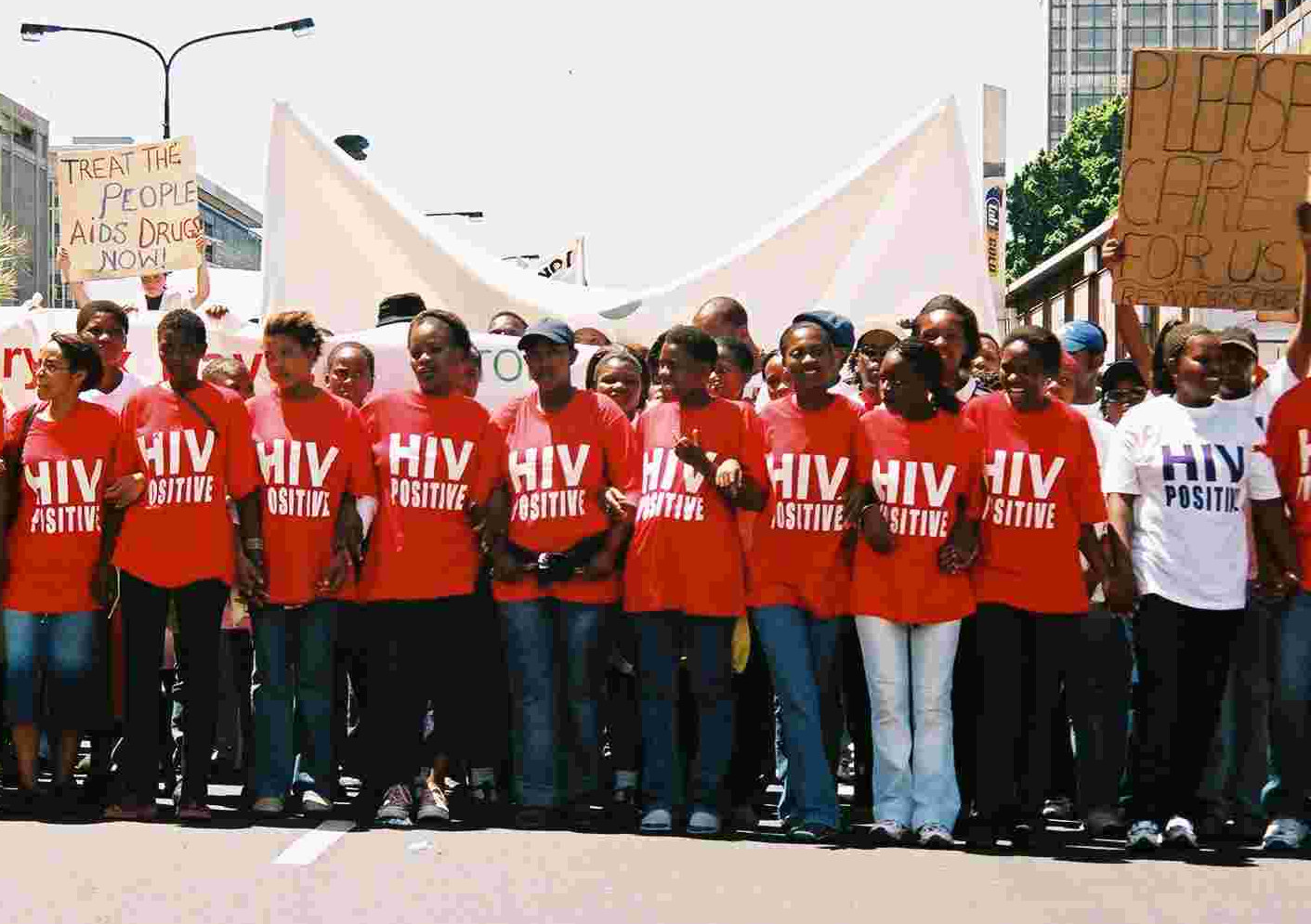
My current blog theme for this class is looking for films or documentaries on various topics that spark my interest. I stumbled across a film called Fire in The Blood on Netflix. This documentary has focused on how HIV/AIDS has affected African countries in the same ways; countries such as Uganda and South Africa.
20-25 million Africans have been killed by HIV/AIDS, suffering one of the most painful deaths. The progression of this disease has been halted by antiretroviral drugs or ARVs. In Europe and North America, the drugs had become readily available and saved the lives of millions. While in Africa, the West had placed patent on the ARVs to prevent any generic drugs from being sold. Mind you, these generic drugs are exactly the same as the patent drugs, just without the brand name. While each pill was produced for a cheap price in Europe and North America, one tablet of an ARV would cost an African up to $40 (South Africa, one of Africa's wealthiest countries earned up to only $68 a week). When journalists and experts asked HIV/AIDS activists why they were against the West sending generic ARVs to Africa, many answered that Africans would not properly use the treatment or the virus would mutate thus spreading to North America and Europe without a proper treatment.
Please take the time to watch this film if you are interested in medicine, international relations, economics, and politics.
Wednesday, September 20, 2017
The White Slaves of Barbary Coast
Say what?! White slave women in Africa?!

Yes, you read that correctly. There white slave women in Africa from the Mediterranean that borders Morocco, Tunisia, and Libya. This bordering is best known as the Barbary Coast, as named by Europeans. The article link attached at the end of this blog is suggests that around "1.5 million Europeans were enslaved by so-called Barbary corsairs..." Corsairs were of different ethnicity and religions--some were African, some were Muslim, some were English, some were Dutch. While the slaves that were abducted and transferred to Africa were of European decent. Like other slave history we have learned, many people died while being transported from one area to the next. Slaves were observed and taken note of to see what they would be worth.
These slaves lived off of barely any water and bread. Other slaves sometimes were "freed" if they were owned by Muslims and converted to Islam. The biggest difference to note about this form of slavery is that on both the corsairs and slaves sides, race and religion did not play any role. Circumstances are what determined whether a person was a corsair or a slave. Anyone including Africans, traveling in the Barbary Coast could easily have been taken and sold as slaves. Corsairs tended to be pirates already and just found another thing to profit off of.
Wednesday, September 6, 2017
Pygmies
I think I have found my current theme for my African Studies' blogs. As it just so happens, one of my wishes has finally come true. I mentioned in class that most videos or documentaries you find on TV and Netflix, are about Africa's wildlife (ecological systems and animals). However, I just so happened to stumble across yet another documentary that has struck my interest in the peoples we tend to assume only live in Africa, tribes and clans of rural areas with no interest in the outside world or technology. As we know, this is not the case in Africa as there are many cities and technology.

Okay- back to my point. You may have heard of these people, the Pygmies. The pygmies reside deep into the forest in Central African Republic. These peoples are short in stature, what you may call "little people." Their village is organized with a sole patriarch which is usually the elder who makes the decisions for the group. The are multiple groups of pygmies and most of them never seen white men before. The huts they live in are made of banana tree leaves and inside, they lay on bark. In the center of the huts are fires for cooking and warmth. All they food they eat is from what they were able to gather and hunt each day. Like most, if not all African tribes and peoples, music is a main component in their culture.
A horrifying and unfortunately interesting fact is that the Congolese used to hunt Pygmies and eat their meat, thinking that by consuming them, they would acquire their skills of surviving in nature without technological advances. The narrator points out that Pygmy meat is or has been sold in markets. Mind you- Pygmies are human beings. They sometimes hunt elephants, but they do not dare hunt gorillas because they are respected as the animals of the jungle.
So there is my short synopsis. If you too are interested in learning a little bit more about the Pygmies, look up "Pygmies: Children of the Jungle" on Netflix.
Enjoy!
Tuesday, August 29, 2017
Amazon Prime
So, I have to be quite honest with you. I was so excited about this course that as soon as I received all my books, I started reading them. I first started with the short history book and then I finished Abina and the Important Men. But, I had an issue. My issue was that I wanted to learn more about the people who lived in modern Africa, living by their old ways as they have been passed down from generation to generation. I also had another issue. I had nothing to watch on Netflix or Amazon Prime because I had binge watched everything. The first, main issue gave me an idea and with good faith in Amazon, I looked up documentaries about Africa (Netflix only had documentaries about the animals of Africa).
I would like to share with you some things I learned about a particular tribe in Africa from the series, "Tribe":
1) This particular tribe resides within the north of Kenya. specifically the Uganda-Kenya border.
2) The semi-nomadic tribe is known as the Pokot.
3) The family is ran by a patriarchy and polygamy is allowed.
4) Wives are to move away from their families and the husbands must give the wives' families dowries, usually in the form of cattle.
5) They drink milk mixed with cows blood to cure children of some diseases and illnesses.
6) When young men turn 15 years old, they go through the 'rite of passage' of circumcision. They cannot scream or cry because they will bring shame to themselves and their families. They will never become warriors. Young men going through the rite of passage has other young men who have already been circumcised to be with him before, during, and after the process.
7) Instead of tattoos, the men and women get cuts on their bodies to tell of their own stories
**If you have Amazon Prime, go to Amazon Prime Video, and search Tribes. The cover photo is of a woman dressed with beautiful African beads.
Enjoy!
https://www.amazon.com/gp/video/detail/B01J8X2TKS/ref=atv_hm_hom_2_c_obwan_2_23?ie=UTF8&pf_rd_i=home&pf_rd_m=ATVPDKIKX0DER&pf_rd_p=3194252682&pf_rd_r=HQEP4XM4HFV1EKGZFPZV&pf_rd_s=center-4&pf_rd_t=12401
I would like to share with you some things I learned about a particular tribe in Africa from the series, "Tribe":
1) This particular tribe resides within the north of Kenya. specifically the Uganda-Kenya border.
2) The semi-nomadic tribe is known as the Pokot.
3) The family is ran by a patriarchy and polygamy is allowed.
4) Wives are to move away from their families and the husbands must give the wives' families dowries, usually in the form of cattle.
5) They drink milk mixed with cows blood to cure children of some diseases and illnesses.
6) When young men turn 15 years old, they go through the 'rite of passage' of circumcision. They cannot scream or cry because they will bring shame to themselves and their families. They will never become warriors. Young men going through the rite of passage has other young men who have already been circumcised to be with him before, during, and after the process.
7) Instead of tattoos, the men and women get cuts on their bodies to tell of their own stories
**If you have Amazon Prime, go to Amazon Prime Video, and search Tribes. The cover photo is of a woman dressed with beautiful African beads.
Enjoy!
https://www.amazon.com/gp/video/detail/B01J8X2TKS/ref=atv_hm_hom_2_c_obwan_2_23?ie=UTF8&pf_rd_i=home&pf_rd_m=ATVPDKIKX0DER&pf_rd_p=3194252682&pf_rd_r=HQEP4XM4HFV1EKGZFPZV&pf_rd_s=center-4&pf_rd_t=12401
Subscribe to:
Posts (Atom)